President Bola Tinubu has called for a global system that ensures communities hosting critical minerals in Nigeria and across Africa receive fair benefits and value creation.
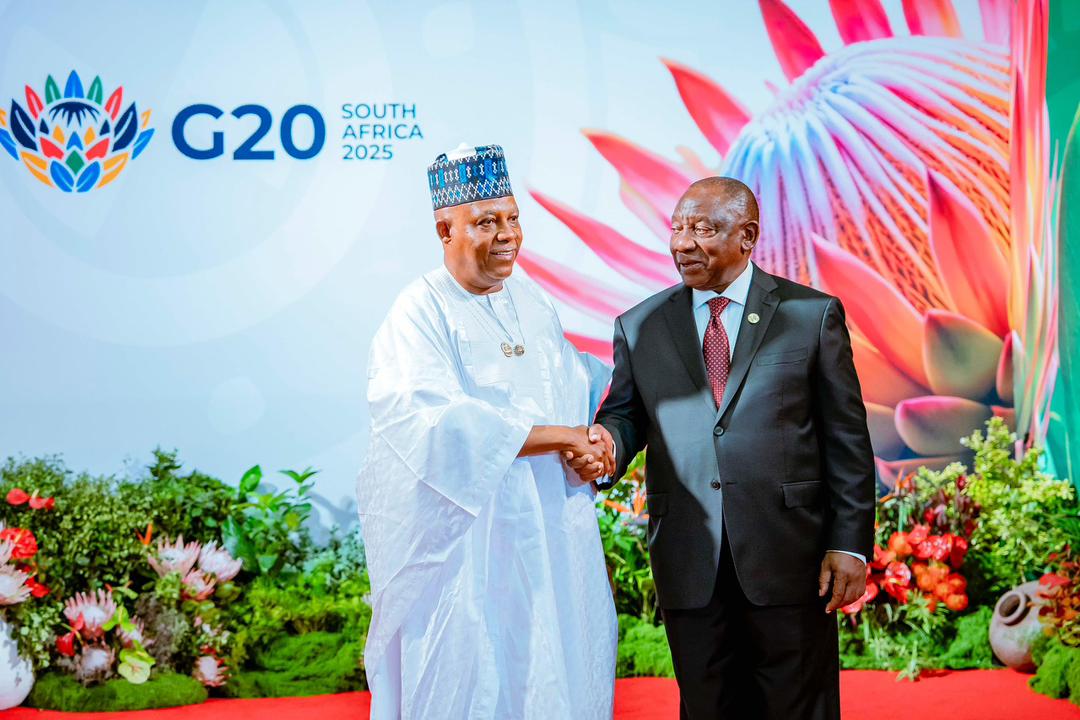
Tinubu, who was represented by Vice President Kashim Shettima, at the Third Session of the 2025 Group of 20 (G20) Leaders’ Summit, noted that communities where the minerals are obtained should be prioritised.
Addressing the summit held at the Johannesburg Expo Centre, South Africa, on Saturday, themed “A Fair and Just Future for All: Critical Minerals, Decent Work, Artificial Intelligence,” Tinubu highlighted that critical minerals are more than natural resources—they are a key driver of industrial transformation for Africa.
As reported by ARISE News, he emphasised that simply having these resources is not enough to ensure prosperity.
Authorities and stakeholders must manage their extraction and trade with integrity, transparency, and accountability so that host communities truly benefit.
Tinibu noted that proper stewardship of these resources is key to converting mineral wealth into sustainable, inclusive development for the local population.
According to him: “Nigeria calls for a global framework that promotes value addition at the source, supports local beneficiation, and ensures that communities hosting these resources are not left behind.
“The issue before us reaches far beyond the narrow arithmetic of economics and speaks to the moral character of the world we aspire to build.”
He further stated that as the world advances through green and digital transitions, progress must remain people-centred.
“Decent work is the anchor that makes these transitions fair, inclusive, and sustainable. It is the foundation of development that ensures every person has the opportunity to contribute, thrive, and share in national prosperity”.
The President highlighted that, under the Renewed Hope Agenda, Nigeria is equipping its youth with future-ready skills through initiatives in digital literacy, vocational training, and entrepreneurship.
He urged G20 leaders to strengthen cooperation on technology transfer, capacity building, and investments that promote inclusivity and place human dignity above profit.
On artificial intelligence, Tinubu emphasised that global leaders and partners must ensure AI serves humanity, supporting development rather than creating disadvantages for the very populations it is meant to benefit.
According to him: “Nigeria supports the creation of global ethical standards for AI that uphold safety, transparency, and equity,” the President said, adding, “We must ensure that AI becomes a tool of empowerment, not exclusion; of job creation, not displacement.”
To harness AI’s job creation and empowerment potential, Tinubu called for deliberate partnerships between developed and developing nations, between the public and private sectors, and between innovation and inclusion.
“The G20 must therefore address systemic bias and foster sustained multilateral dialogue to ensure that the benefits of AI are shared equitably and its risks responsibly managed,” he added.
The president further highlighted the interconnected role of critical minerals, decent work, and artificial intelligence in building economies that “uplift rather than exclude,” measuring success not just by growth but by the dignity afforded to people.
He urged global leaders to ensure Africa becomes “a continent of value creation, innovation, and dignity in work,” rather than merely a supplier of raw materials.
On financial matters, he called for reforms to create “a more equitable and responsive system” to manage global financial flows and address recurring debt crises fairly, particularly for developing countries often marginalised in global trade.
He warned that “rising debt burdens have continued to drag economies back into cycles of fragility,” turning local problems into global vulnerabilities.
He stressed that Africa cannot achieve transformative development without a unified commitment from the G20, urging its leaders to prioritise debt sustainability and the responsible management of critical minerals, and emphasising that “the G20 must…advance policies that drive sustainable growth, promote financial inclusion and confront emerging risks.”