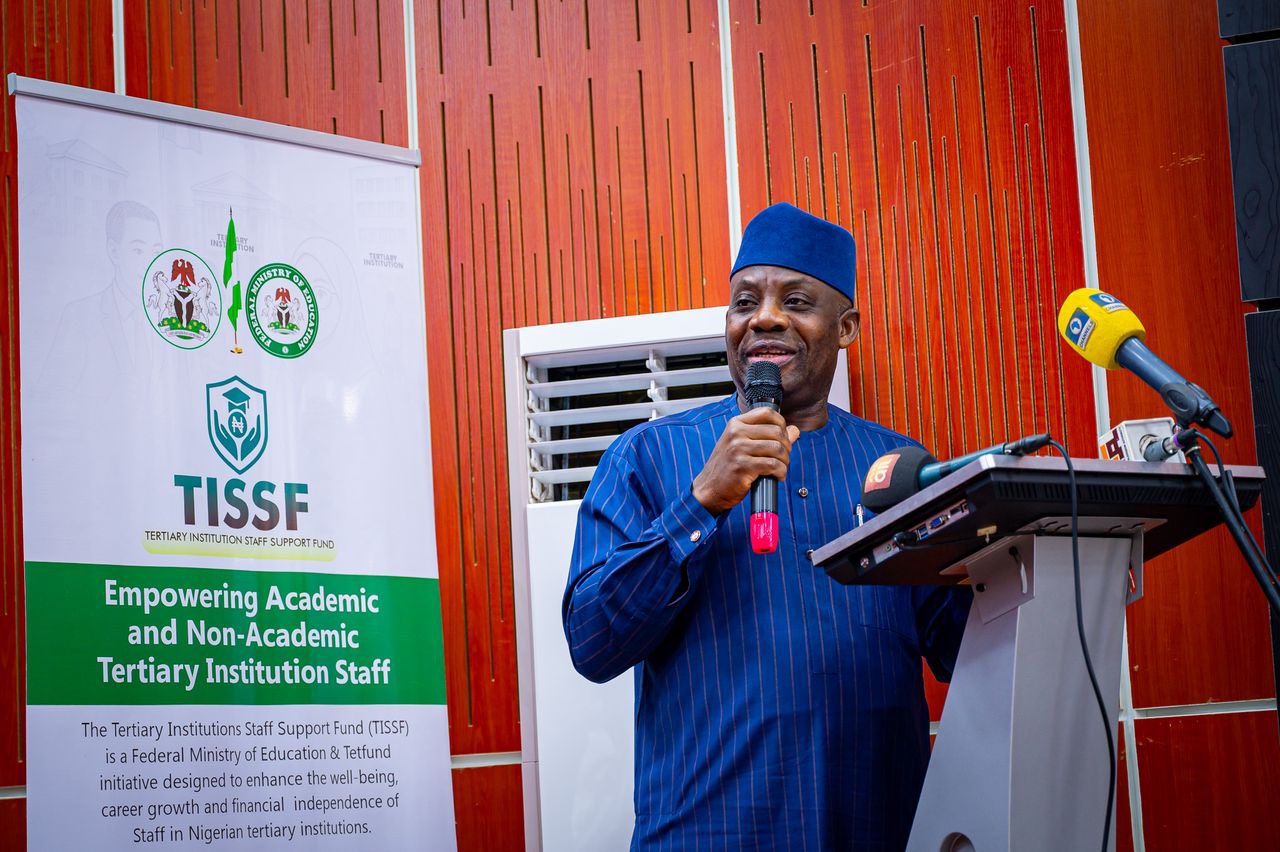
The Nigerian Academy of Education has faulted the Federal Government’s decision to scrap the National Language Policy, urging the Minister of Education, Maruf Alausa, to reverse his decision and restore mother tongue as the language of instruction at foundational levels of schooling.
NAE, in a position paper submitted to the minister on November 25 and released to journalists on Friday, argued that overwhelming evidence supports early education in indigenous languages, which it said improves learning outcomes, strengthens cultural identity, and promotes inclusive national development.
The statement, signed by NAE President, Emeritus Prof. Olugbemiro Jegede and Secretary‑General, Prof. Chris Chukwurah, described the policy reversal as a “grave disservice” to Nigeria’s educational progress.
It warned that discontinuing mother‑tongue instruction without rigorous evaluation amounted to “permanent recolonisation and the burial of Nigeria’s future and pride.”
Recall that the Federal Government recently cancelled the 2022 National Language Policy, designating English as the sole medium of instruction at all levels—a position that Alausa restated at the 2025 Language in Education Conference organised by the British Council in Abuja.
But the NAE maintained that research, including historic programmes such as the Ife Six‑Year Project and recent bilingual‑education studies, shows that pupils taught first in their native languages perform better academically, even in English, than those introduced prematurely to foreign‑language instruction.
The Academy faulted the rationale provided by the minister, insisting that poor performance in public examinations cannot be attributed to mother‑tongue instruction, which ends at primary four.
It said no empirical data support claims that indigenous‑language teaching has undermined educational outcomes in the past 15 years.
While calling for immediate reinstatement of the policy, the Academy urged the government to strengthen implementation through teacher training, improved learning materials, stakeholder engagement, and regular evidence‑based reviews.
It said safeguarding early‑grade learning in Nigerian languages is vital to preserving national heritage and preventing further decline in literacy.
The NAE reaffirmed its readiness to work with the ministry to ensure a functional and culturally grounded education system for future generations.
Similarly, the Academy decried the resurgence of school attacks by terrorists, warning that Nigeria’s education system is “under siege” and edging toward collapse as relentless attacks on schools devastate learners, teachers and communities.
In a separate statement issued on Tuesday and signed by both its President and Secretary‑General, the Academy said at least 92 school invasions, 2,500 abducted learners, over 180 children killed, 90 injured, and more than 90 still missing have been recorded since the 2014 Chibok abduction, culminating in the latest attack at St. Mary’s School, Niger State, on November 21.
NAE also noted that over one million children now live in fear of going to school.
“These are not statistics but shattered dreams, grieving families and a generation at risk,” the Academy said, lamenting that education, the bedrock of national development, is being eroded by mounting violence.
While acknowledging government efforts such as the Safe Schools Declaration and the National Plan for Financing Safe Schools, the NAE said these measures remain grossly inadequate, creating only “a false sense of security” as schools in the North‑East and Middle Belt remain soft targets.
The Academy warned that insecurity has triggered a collapse of public confidence, with schools lacking basic governance structures, emergency‑response systems and secure infrastructure.
It noted that the psychological toll on learners, teachers and families is severe, ranging from trauma and anxiety to burnout and emotional breakdown.
The ripple effects extend deep into the economy as millions of children are out of school, communities are destabilised, and long‑term human capital is greatly diminished.
While calling for decisive intervention, the NAE demanded full protection for learners and school personnel in line with national and international obligations, stringent punishment for perpetrators, improved intelligence coordination, trauma care for victims and compensation for bereaved families.
“Education is the lifeblood of any nation. If Nigeria fails to protect its schools and its young ones, it fails to protect its future,” the statement read.
The Academy urged government, security agencies and civil society to rise above rhetoric and take bold, coordinated action.
It added, “The time for promises has passed; the time for results is now.”
The Nigerian government reversed its policy on teaching young children in their local indigenous languages, opting instead to reinstate English as the medium of instruction from pre‑primary levels through tertiary education. The decision marked a dramatic reversal of a policy first introduced three years ago, which aimed to promote Nigeria’s rich linguistic heritage and improve early‑childhood learning.
The reversal, announced by Education Minister Tunji Alausa, cited poor academic results in regions that adopted the language‑of‑origin curriculum as the reason for the change. According to Alausa, assessments from national examination bodies revealed elevated failure rates in key exams in states where indigenous languages were heavily used in foundational schooling.
The original policy, introduced in 2022, required children from Early Childhood Education to Primary Six to be taught in their mother tongue or the language of their immediate community. However, the government argues that this policy failed to deliver, leading to poor performance in national exams administered in English.
The decision sparked mixed reactions, with some education experts welcoming the change and others warning that it threatens Nigeria’s linguistic diversity and could undermine the benefits of bilingual education.
While some argue that the policy reversal is a pragmatic response to educational failures, others believe that it ignores the importance of cultural preservation and the benefits of mother‑tongue instruction.